




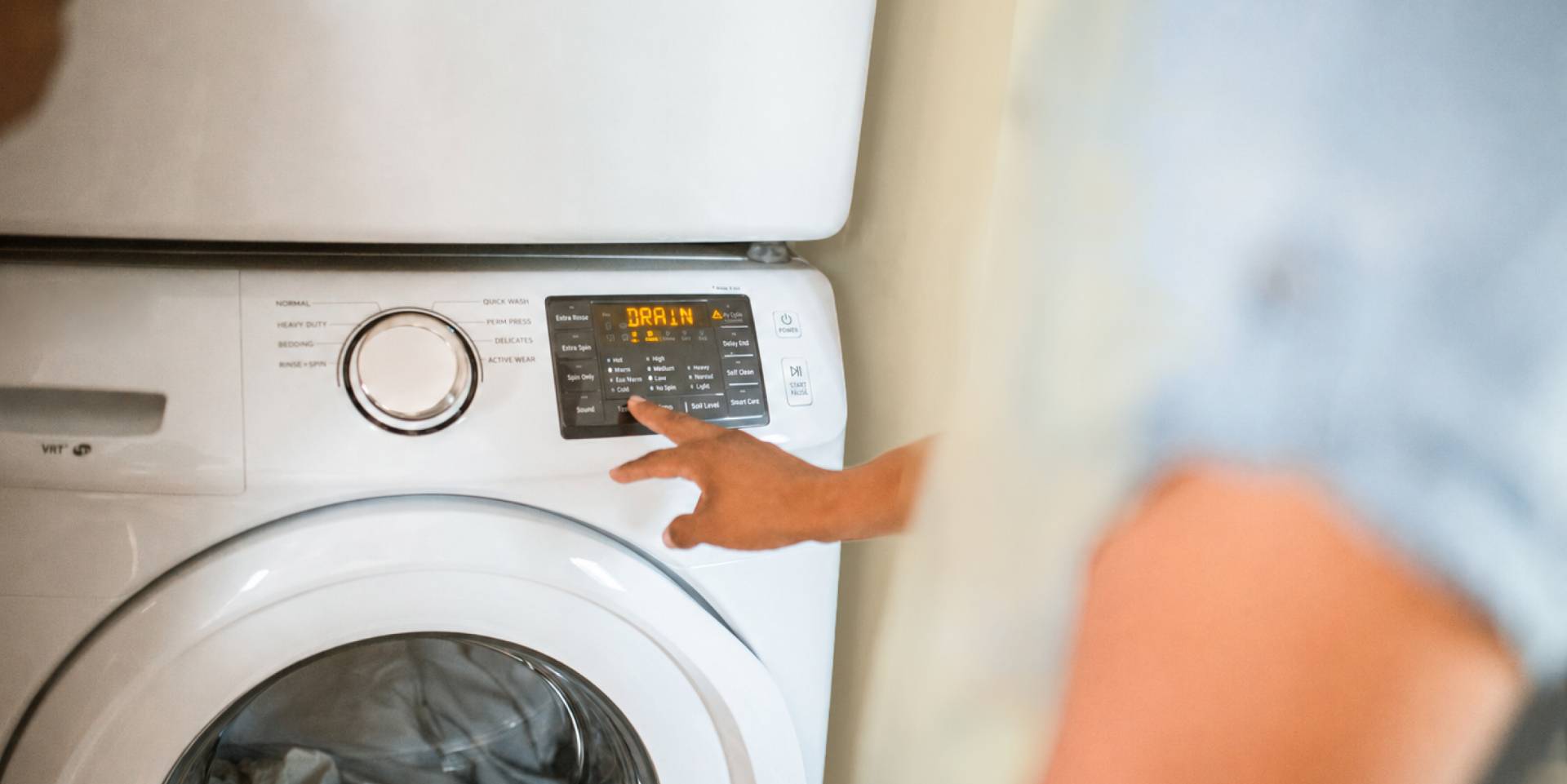

A washing machine that won't drain or spin usually gives you some clear signs. You may find water still sitting in the tub after the cycle ends, notice that the washer never reaches a full spin, or pull out clothes that are much wetter than usual.
Drain and spin problems can also be connected. If the washer can't drain the water properly, it may have trouble completing the spin cycle. However, each problem can have its own cause, from the cycle settings and laundry load to the drain hose or an internal component.
Before calling for repair, work through the checks below in order. Start with the simplest possible causes and move on if the problem continues.
Check If the Door or Lid Is Fully Closed
Start with the simplest check: make sure the washer door or lid is completely closed. Washers are designed to prevent certain operations, including spinning, when the door or lid isn't properly secured.
Open the door or lid, then close it firmly again. Make sure clothing or another item isn't caught in the opening and preventing it from latching properly. If the washer still doesn't spin even though the door or lid appears to be securely closed, there may be a problem with the latch, lock, or the switch that detects whether it is closed.
Before moving on, take a quick look at the cycle and spin settings as well. Delicate or gentle cycles may use slower spin speeds, leaving clothes wetter than expected. A Low Spin or No Spin setting can have a similar effect. If there is still water sitting in the tub, however, the problem is more likely related to drainage than the selected spin speed
Check the Cycle and Spin Settings
Before checking the washer, review the cycle and spin settings you selected. Different wash cycles use different spin speeds depending on the type of laundry they are designed to handle.
Gentle, Delicate, and Hand Wash cycles typically use slower spin speeds to reduce stress on delicate fabrics. As a result, more water may remain in the clothes when the cycle ends. A Low Spin setting can have a similar effect, while selecting No Spin may prevent the washer from performing a final spin altogether.
Normal and Heavy Duty cycles generally use stronger or faster spins to remove more water from everyday or heavier loads. If your clothes are coming out unusually wet, make sure the selected cycle and spin speed are appropriate for what you're washing.
If the settings look right but the washer still isn't draining or spinning properly, move on to the next check.
Check for an Unbalanced or Overloaded Load
Washers pause or cancel the spin cycle when the load is unbalanced. It's a safety measure, not a sign of a broken machine. A single heavy item like a comforter, or laundry piled unevenly on one side of the drum, is usually the cause.
When your washer seems to be struggling to spin, try redistributing the load or removing a few items to make the drum balance.
Using too much detergent can also affect how well your washer drains and spins. Excess detergent can create too many suds, making it harder for the washer to remove water properly. This can leave water in the tub or clothes wetter than expected at the end of the cycle. If excess suds are causing the problem, correcting the detergent amount may help the washer drain and spin normally again.
Check for Blockages in the Drain System
If there is still water sitting in the tub, check whether something is preventing the washer from draining properly. Start with the drain hose running from the back of the washer to the household drain. A kinked, crushed, or clogged hose can slow or stop the flow of water. Carefully inspect the hose and straighten any kinks. Clear visible blockages only where they are safe to reach.
The way the drain hose is installed can also affect drainage. Because installation requirements vary by washer, check your owner's manual for the correct drain height and hose placement for your model.
Next, check the drain pump filter if your washer has an accessible one. These filters can collect lint, coins, buttons, and other small items over time, eventually restricting water flow. Accessible drain pump filters are common on front-load washers, but not every washer has one.
Check your owner's manual to confirm whether your model has a drain pump filter and how to clean it safely. Be prepared for some residual water to come out when the filter is opened, and follow the manufacturer's instructions for draining the washer before removing it.
The Problem May Be Inside the Washer
If you've checked the load, door or lid, drain hose, and filter, but the washer still won't drain or spin, the problem may be with an internal component. Several parts work together to drain the water and complete the spin cycle, so the exact cause can vary by washer.
Drain Pump Problem
The drain pump moves water out of the washer during the drain cycle. If the pump becomes clogged, damaged, or fails to operate properly, water may remain in the tub. Since the washer may need to drain before completing the spin cycle, a pump problem can affect both draining and spinning.
Door or Lid Switch Problem
The door or lid may look completely closed, but the washer still needs to detect that it is properly secured. If the latch, lock, or switch isn't working correctly, the washer may not proceed with the spin cycle even though everything appears normal from the outside.
Other Internal Components
If neither of those appears to be the problem, the cause may be elsewhere inside the washer. Depending on the model, problems with the motor, drive system, control board, or other internal components can interfere with draining or spinning.
Diagnosing these problems usually requires more than the basic checks you can perform from outside the washer. If you've worked through the troubleshooting steps above and the problem continues, it may be time to have a technician inspect the machine.
Should You Repair or Replace Your Washing Machine?
A washer that won't drain or spin doesn't automatically need to be replaced. If you've worked through the basic checks and the problem continues, however, it may be time to have the washer professionally inspected.
Consider scheduling a repair if the washer repeatedly fails to drain or spin, shows an error code you can't clear, or starts making unusual noises. Leaks, burning smells, or electrical problems are also signs to stop using the washer and have it inspected. A technician can determine whether the problem comes from the drain pump, door or lid switch, or another internal component.
If the washer is older, has needed repeated repairs, or requires an expensive repair, replacement may make more sense. Consider the washer's age, overall condition, and repair cost before deciding whether to fix it or invest in a new machine.
If you decide to replace it, consider the capacity you need, your available laundry space, and whether a top-load or front-load washer better suits your household. Sorenson's carries washers from Maytag, Whirlpool, and Amana across different sizes and budgets.
Browse washing machines at Sorenson's Appliance to compare your options.